Creating a Bird-Friendly Balcony: A Step-by-Step Guide
October 08, 2026 - Garden Birds

October 08, 2026 - Garden Birds

October 06, 2026 - Conservation
September 24, 2026 - Bird Species
Watch a good wildlife garden for ten minutes and something becomes clear: nothing in it is wasted. A seedhead left standing through winter, a shallow dish of water, a scruffy corner of ivy — small decisions, stacked up, are what bring the birds in. You do not need an acre or a large budget. Most of what a bird needs will fit into a suburban plot, a courtyard, or a few pots on a balcony.
Work through the checklist below at your own pace. Two or three items will change what visits. All of them will change how long it stays.
Before you buy anything, spend a week noticing. Where does the sun land in the morning? Which corner stays damp? Where do cats sit? Which shrubs already carry berries, and which are clipped so tightly they offer nothing but a perch?
Write down what you actually see: blue tits on the fence, a dunnock shuffling under the hedge, a sparrowhawk passing through. Knowing who is already nearby tells you what to encourage. It also pays to look over the boundary. Mature trees, hedgerows and overgrown gardens next door act as corridors, so if your plot links two of them, you are starting from a good position.
The most useful change most gardeners can make is to bring in native plants. They support far more insect life than most ornamentals, and insects are the food that raises chicks. A pair of blue tits feeding a brood will make hundreds of trips to a nest box with caterpillars, so a garden with nothing for caterpillars is a garden with no chicks.
These earn their place in almost any plot:
A mixed native hedge gives nesting cover, food and a windbreak in one, and it costs less than panelled fencing. Plant bare roots between November and March, keep it bushy rather than box-tidy, and never cut it between March and August, when nests are in use. If a hedge must be trimmed, do it in late winter and check for active nests first.
Birds feed and move at different heights. A tall tree, a shrub layer, a hedge, long grass and a few clumps of ground cover together create far more opportunity than a single border, however well planted. Even a small garden can hold three of those layers.
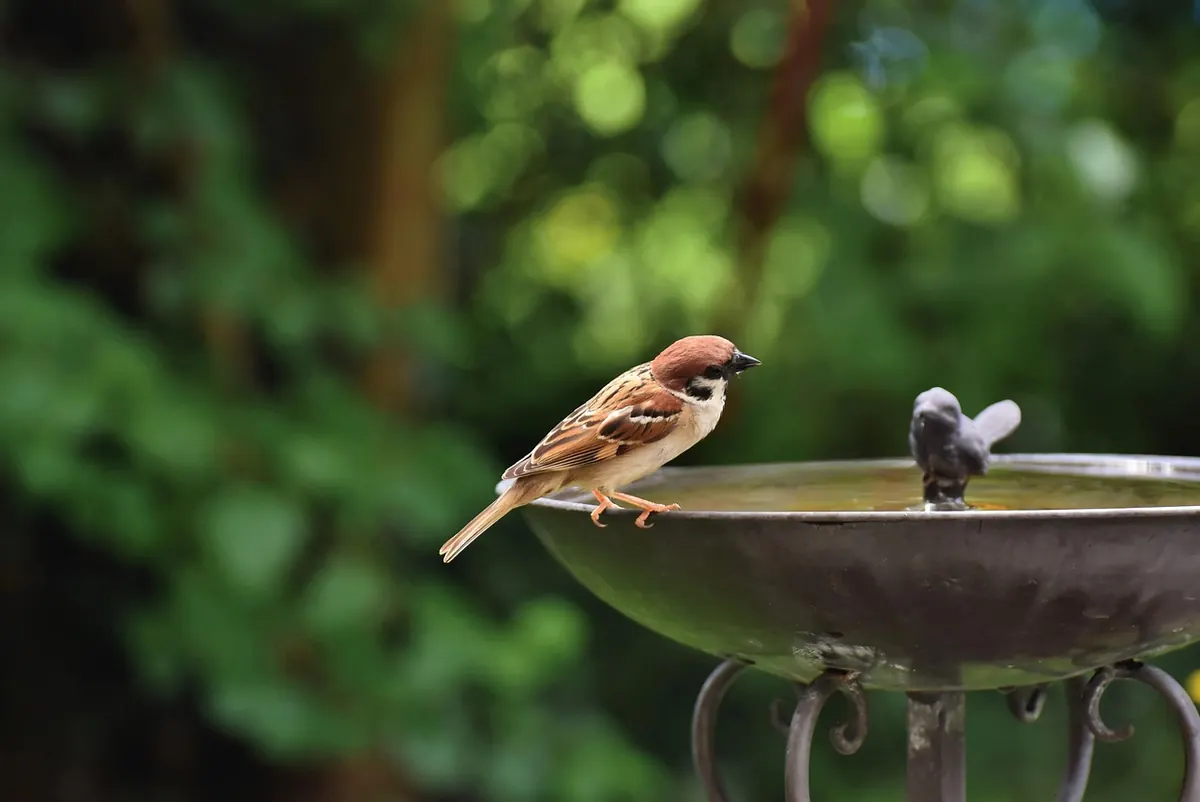
Water is the single most effective addition you can make, and it need not be a pond. A shallow dish or bird bath, two to five centimetres deep, with a gently sloping side and a stone or two for grip, will be used for drinking and bathing all year. Site it near cover but a metre or so clear of it, so birds can watch for cats while they drink.
Refresh it daily in hot weather and scrub it out regularly with hot water and a stiff brush — not with cleaning products. In winter, float a small ball to keep a gap in the ice, or pour on warm water from the kettle. Never break ice by force.
If you have room, a small pond is even better. A sunken washing-up bowl or old sink will do, with one sloped side for birds to wade, a few stones and some oxygenating plants. Leave out the fish.
Natural cavities are in short supply in most gardens, so boxes fill a real gap. Match the entrance to the species: around 25 mm suits blue tits and coal tits, 28 mm suits great tits and tree sparrows, and 32 mm suits house sparrows and nuthatches. Robins, wrens and pied wagtails prefer an open-fronted box tucked into vegetation.
Fix boxes two to three metres up, facing somewhere between north and east so they avoid driving sun and rain, away from feeders and out of reach of cats. Put them up in autumn or late winter, and clean them out once the breeding season is over. In the UK, wild birds, their nests and their eggs are protected by law, so if a box is in use, leave it alone — if you are unsure what is permitted, check with a wildlife organisation before you touch anything.
Long grass, ivy, log piles and a patch of nettles all provide nesting and feeding space too. Resist the urge to strim every corner.
Pesticides do not distinguish between the aphid and the blue tit that eats it. Weedkillers and slug pellets can harm birds and hedgehogs directly, and they strip out the insect life that nestlings depend on, so the simplest rule is to stop using them.
In practice that means tolerating a little damage. Aphids feed chicks. A ragged leaf or two is not a crisis. Use barriers, hand-pick slugs after rain, encourage frogs, ground beetles and hedgehogs, and accept that a garden with holes in its leaves is working as it should. If you must spray, never do it on flowering plants where bees and other pollinators are active.
Pick three things rather than thirty. A shallow dish of water, one native shrub or a small bag of bare-root hedging, and a decision to stop using slug pellets will do more for birds in a single season than a whole trolley of feeders.
Then let it grow a little untidy. The mess is the point — the seedheads, the leaf litter, the ivy on the fence and the patch of long grass are the habitat. Your garden does not need to look wild everywhere. It just needs a few corners where the birds come first.
Photo: Ralphs_Fotos / Pixabay
Turn a small urban balcony into a proper birdwatching spot with the right feeders, fresh water and a few sturdy pots...
Artificial light disrupts bird migration, breeding and feeding across the UK. Here is how night-time lighting...
October 08, 2026 - Garden Birds
October 06, 2026 - Conservation
Copyright © 2026 Finch Path. All Right Reserved.