Creating a Bird-Friendly Balcony: A Step-by-Step Guide
October 08, 2026 - Garden Birds

October 08, 2026 - Garden Birds

October 06, 2026 - Conservation
September 24, 2026 - Bird Species
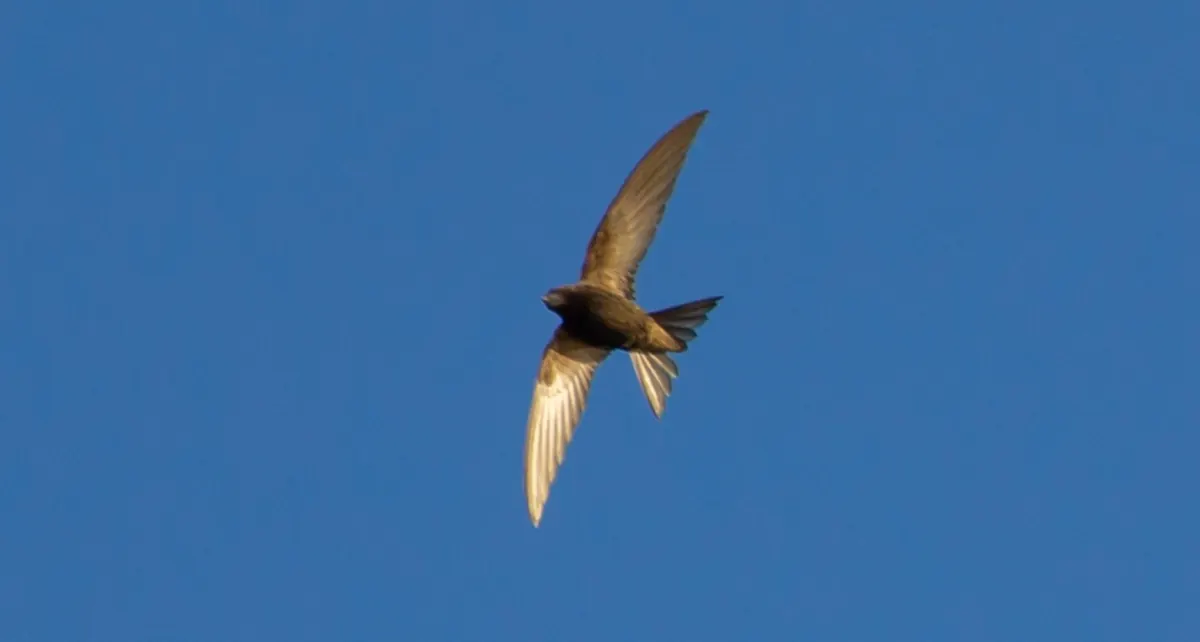
A warm May evening, a screaming party of dark shapes racing over the rooftops. Are they swifts, swallows or house martins? All three are summer visitors to the UK, all three hunt insects on the wing, and all three can appear in the same patch of sky. Yet each has a distinct silhouette, a particular way of flying, and a calendar of its own. Learn those three things and the confusion falls away.
When a bird is high against a bright sky, colour is often useless. Shape is everything. Start with the outline, then look for the details that confirm it.
If you can see a white rump, you are looking at a house martin. If you can see long tail streamers, it is a swallow. If the bird is all dark with stiff, swept-back wings, it is a swift.
Flight style separates them even when the light is poor. Watch for a few seconds rather than a single frame.
Swifts fly fast and direct, with rapid wingbeats followed by stiff-winged glides. They often climb high and chase each other in screaming parties, especially in the evening. They rarely flap continuously like a swallow; their wings look rigid, almost like a switchblade. You will not see a swift perch on a wire or a fence. They do almost everything in the air.
Swallows sweep low over fields, ponds and roads, gliding and turning with a fluid, acrobatic grace. Their wingbeats are deeper and more elastic than a swift’s. They frequently perch on wires, fences and roofs, and they will often fly close to the ground or water, snapping up insects. The long tail streamers trail behind and can flick open and closed as they turn.
House martins have a lighter, more fluttery flight. They often circle higher around buildings, with quick, shallow wingbeats and frequent short glides. They look buoyant, almost butterfly-like compared with a swift. They perch readily on wires and roof ridges, often in groups, and their white rumps flash as they turn.
The three birds arrive and leave on different schedules. That calendar is one of the most reliable clues, especially at the edges of summer.
Weather shifts the dates, so treat these as a general guide. A cold snap can push arrivals back; a warm autumn can keep swallows and martins around longer. But if you see a swift in late September, look again. It may be a swallow or a martin flying high.
Where they breed is another strong clue, and it often explains why you see them in particular places.
If you see a mud cup under the eaves of a modern house, it is almost certainly a house martin. If you see a bird flying straight into a tiny gap in a roof, it is a swift.
Sound can confirm what your eyes suspect. Swifts give a high-pitched, screaming call, often in a chorus as they race overhead. Swallows have a gentle, twittering song and a liquid, warbling alarm call. House martins have a dry, rattling twitter, less musical than a swallow and softer than a swift.
Colour is useful at close range: swallows have a dark red throat and pale underparts; house martins are clean white below with a white rump; swifts are sooty black all over except for a pale chin. But do not rely on colour alone in poor light or at height.
Most confusion comes from catching a single glimpse. Here is a quick check list for the next time a bird flashes past.
If you still cannot decide, watch the bird for longer. Flight style and silhouette will settle it. A house martin on a wire with its white rump showing is unmistakable. A swallow low over a pond with streamers trailing is just as clear.
Next time you are out, try this simple routine. First, stop and watch the bird for at least ten seconds. Do not try to identify it from a single pass. Second, note the silhouette against the sky: wings, tail, and body shape. Third, check for the white rump or the long streamers. Fourth, consider the date and the habitat. A swift over a town centre in May is expected; a swallow over a farm pond in September is equally so. Fifth, listen. The call often confirms the identification before you see the bird clearly.
Keep a notebook or a phone note with the date, location, weather and what you saw. Over a season, you will build a personal picture of when each species arrives and leaves in your area. That local knowledge is more valuable than any general rule. And if you are unsure, it does not matter. The pleasure of watching these birds is in the watching, not just the labelling. With a little practice, you will soon tell a swift from a swallow from a house martin without breaking stride.
Photo: TheOtherKev / Pixabay
Turn a small urban balcony into a proper birdwatching spot with the right feeders, fresh water and a few sturdy pots...
Artificial light disrupts bird migration, breeding and feeding across the UK. Here is how night-time lighting...
October 08, 2026 - Garden Birds
October 06, 2026 - Conservation
Copyright © 2026 Finch Path. All Right Reserved.