Creating a Bird-Friendly Balcony: A Step-by-Step Guide
October 08, 2026 - Garden Birds

October 08, 2026 - Garden Birds

October 06, 2026 - Conservation
September 24, 2026 - Bird Species
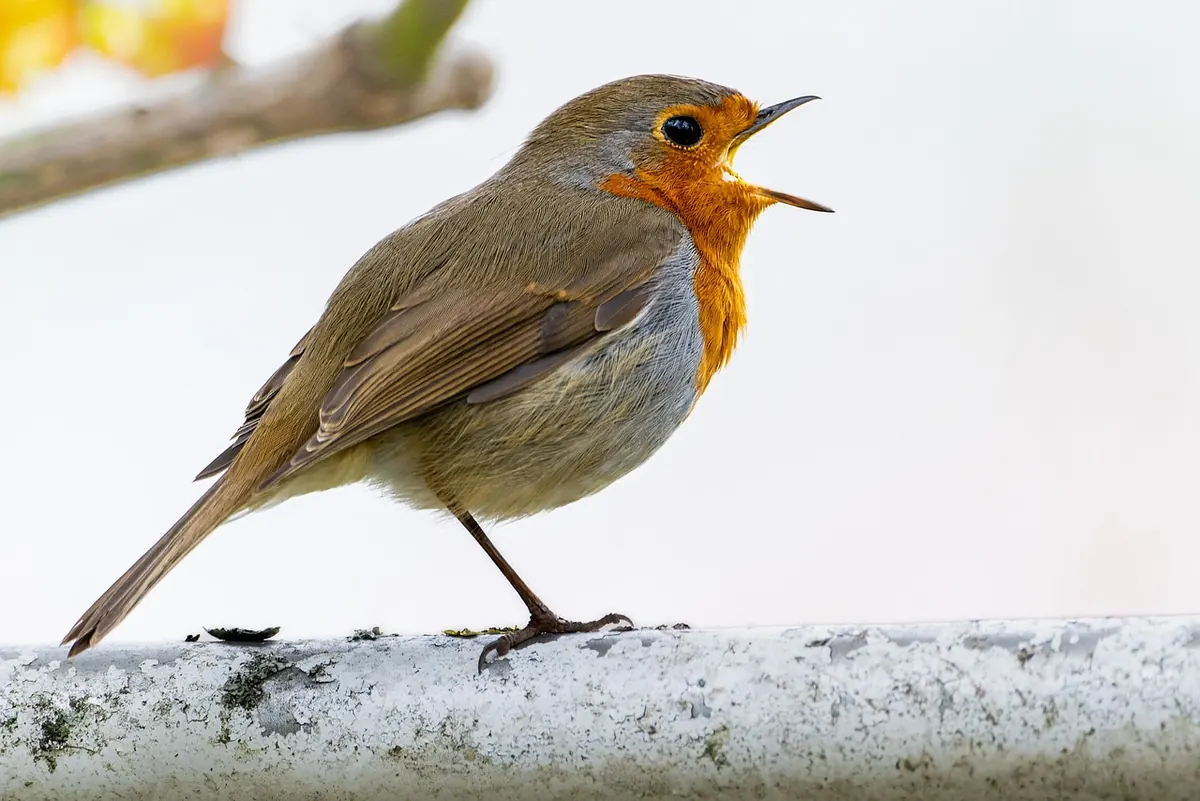
The robin is the bird everyone thinks they can name, which is why the dunnock slips past so often. Small brown bird, low in the hedge, hopping about near your feet: plenty of people settle on "robin" and move on. Then the real thing lands on the spade handle, red breast blazing, and the difference seems obvious — with hindsight.
Telling these two apart is mostly about knowing what to check, and in what order. Below you will find the plumage marks worth checking, the postures that give each bird away, the songs and calls that settle it in seconds, and a short routine you can run through next time both turn up in the same garden.
Both are small, round-bodied, brownish birds that spend most of the year within a metre or two of the ground. Seen for three seconds through a rain-spattered window, either can read as "little brown job" and the brain fills in the rest.
The mistake usually runs one way. A dunnock gets logged as a robin that has somehow lost its red breast, or a juvenile robin — which genuinely has no red at all — gets logged as a dunnock. The good news is that the two are not especially similar once you look properly. You rarely need more than a few seconds of decent light and one clear view of the head.
An adult robin carries orange-red from the forehead, down over the face, across the throat and onto the breast, with soft blue-grey fringes along the sides of that red patch. The upperparts are plain olive-brown, the belly whitish. Males and females look identical, so a "female robin" is not a thing you can identify by colour.
Juvenile robins, on the wing from roughly June to August, have no red whatsoever. They are brown and mottled, speckled with pale buff spots across the head, back and breast, and at a glance they look like tiny thrushes. The red feathers come through during the late-summer moult, and by autumn most young birds look like adults. In that window, a young robin feeding quietly on the ground can look remarkably dunnock-like from a distance.
A dunnock never shows red, at any age. Its head and face are grey, the breast is grey with faint darker streaking, and the back is brown with obvious dark streaks. If you can see the head clearly, the grey usually decides it.
Work through these in order. The first two or three will normally settle the identification on their own.
A robin stands upright, almost at attention, and the legs look surprisingly long for the size of the bird. It perches in the open, often on something man-made — a spade handle, a fence post, the rim of a pot — and watches you work. On the ground it hops with purpose and a straight back, frequently flicking its wings and tail. It is bold, quarrelsome and usually alone or with its mate.
A dunnock does the opposite. It creeps, body held low and level, tail slightly cocked, slipping mouse-like along the base of a hedge or under a shrub. Its signature move is the double-scratch: a quick jump forward, both feet scratching back through the leaf litter, then a hop back to see what it has uncovered. The wings flick nervously, often in rapid little bursts. It rarely sits up in the open for long, and you will often hear a thin call and see nothing but a shape sliding deeper into cover.
Grey face, streaky back, creeping low: dunnock. Red face, plain brown back, upright and bold: robin.
If you can hear the bird well, you barely need to see it. The robin's song is clear, liquid and high, delivered in phrases with pauses in between, as though the bird is thinking about the next one. It sings for most of the year, including midwinter, and in towns it often sings at night under streetlights. Its calls are a sharp repeated tic-tic-tic and a thin, high tsee.
The dunnock's song is quick, thin and hurried — a high, slightly jangling warble that sounds as if it has somewhere else to be. It is usually delivered from a low branch or the top of a hedge and is easy to miss. The call is a thin, high tseep, often repeated, sharper and more insistent than the robin's. Once you have heard the two side by side, you will not mix them again.
Where a bird feeds is one of the quickest clues of all. Robins come to the table, take mealworms from a dish, work open lawn and follow digging. They will happily sit on a feeder and see off anything that approaches.
Dunnocks feed almost entirely on the ground. They work the leaf litter beneath hanging feeders, picking up spilled seed, and root about in the dark spaces at the base of hedges and dense shrubs. They occasionally hop onto a low tray, but a small brown bird pecking quietly among dead leaves under a feeder is nearly always a dunnock. A small brown bird sitting on top of the feeder, hogging the food, is nearly always a robin.
Pick one corner of the garden and make it easy for both birds to show themselves. Scatter a little loose seed under a shrub for the dunnock, and keep a dish of mealworms or a tray feeder for the robin. Then spend ten minutes watching the ground rather than the feeder. The dunnock's double-scratch is the single most useful thing to learn — once you have seen it, you will spot it every time, even when the bird is half hidden.
It also pays to keep a note of dates through the year. The first speckled, red-less young robins in early summer are the birds most often misidentified, and if you can learn that mottled look in July, you will not be caught out by it next June. Meanwhile, if a bird has been quietly working the same hedge bottom for weeks without ever drawing attention to itself, that in itself is a strong clue: dunnocks are the most modest of garden regulars, and the robin is anything but.
Photo: Gruendercoach / Pixabay
Turn a small urban balcony into a proper birdwatching spot with the right feeders, fresh water and a few sturdy pots...
Artificial light disrupts bird migration, breeding and feeding across the UK. Here is how night-time lighting...
October 08, 2026 - Garden Birds
October 06, 2026 - Conservation
Copyright © 2026 Finch Path. All Right Reserved.