Creating a Bird-Friendly Balcony: A Step-by-Step Guide
October 08, 2026 - Garden Birds

October 08, 2026 - Garden Birds

October 06, 2026 - Conservation
September 24, 2026 - Bird Species
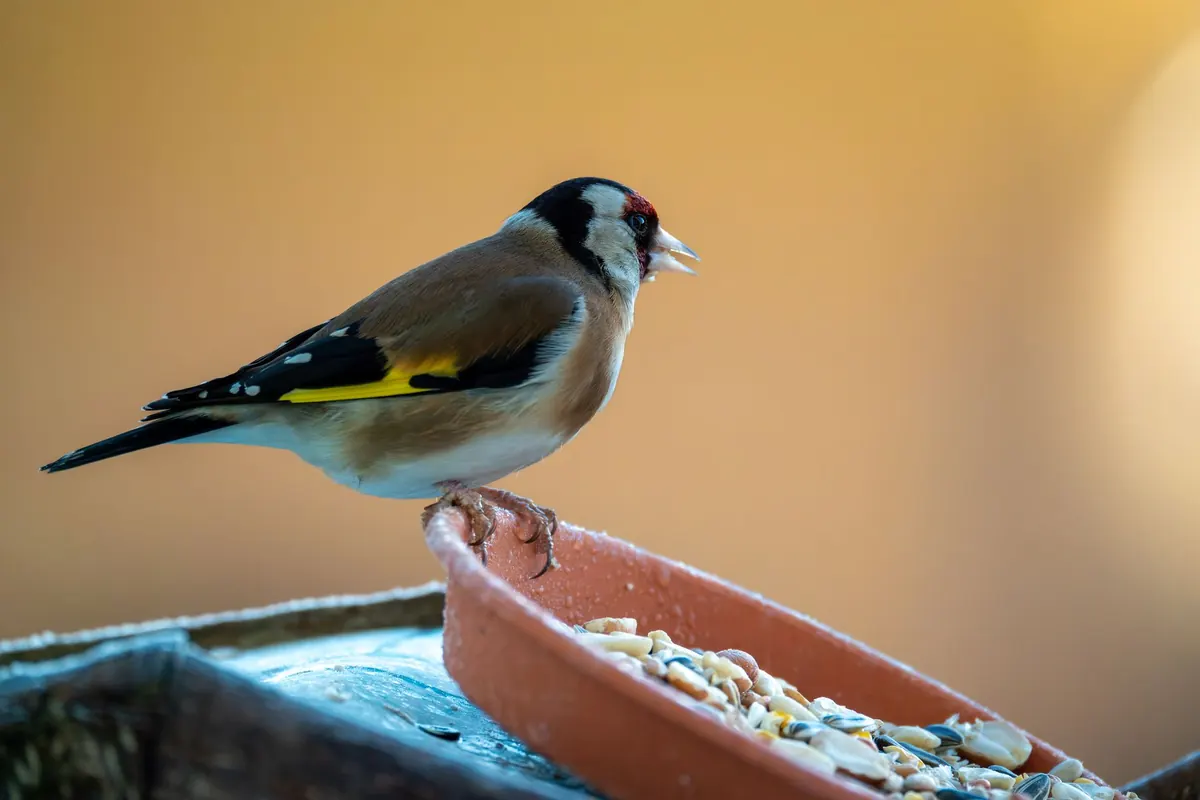
Finches are the ideal birds to learn on. They are common, they often sit in the open, and they give you time to look properly. Once you can separate a chaffinch from a greenfinch, the rest of the family starts falling into place, and even a short walk along a hedge becomes more interesting. Ten species cover almost everything you are likely to meet in Britain, and the trick is to work in a fixed order: bill first, then wing pattern, then behaviour. Do it the same way every time and identification stops being a guess.
All finches are seed-eaters, so their bills are short and conical, but not to the same degree. A hawfinch's bill looks like a nutcracker. A goldfinch's is a fine pair of tweezers, built for prising seeds out of teasel heads. A crossbill's mandibles cross over, which lets it lever pine cones apart. Between those extremes sit the chaffinch, greenfinch, brambling and bullfinch, all with a sturdy, medium-length cone. Size alone rules out a lot: a hawfinch is roughly the bulk of a starling, while a lesser redpoll is barely bigger than a blue tit.
Shape matters as much as colour. Greenfinches and bullfinches are thickset, with heavy chests and short tails. Linnets are slim and long-tailed, almost wagtail-like on a wire. Siskins and redpolls are tiny, compact, and endlessly busy. Then watch the flight: finches move in a bouncing, undulating line, a few quick wingbeats followed by a closed-wing dip. It is a useful clue when birds cross a gap in the hedge too fast to identify properly.
Learn the order: bill, wing, behaviour. Anyone who starts with colour will spend half the winter trying to turn a female chaffinch into something rarer.
Usually the first finch you master, and a good benchmark. The male has a blue-grey crown and nape, a pinkish-rusty face and breast, and a warm brown back. Crucially, he shows a bold white wing bar and white edges to the outer tail feathers. The female is quiet olive-brown but carries exactly the same wing and tail markings. Both often feed on the ground beneath the feeders rather than on them, and both give a sharp pink call, as well as the familiar descending song that ends in a flourish — often written as "chip-chip-chip-cherry-cherry".
Chunky and slightly hunched, with a heavy pale bill. The male is yellow-green with bright yellow edges to the flight feathers and tail; the female is duller and greyer, with faint streaking. That flash of yellow in the wing is the giveaway, along with a deeply forked tail. Listen, too, for the wheezy, drawn-out dweeez delivered from the top of a conifer. Greenfinches are still widespread, though numbers dropped sharply after disease spread through garden feeding stations, so keep feeders clean and rotate them.
Unmistakable once seen well: red face, black and white head, warm buff body, and a black wing crossed by a broad gold bar. The bill is fine and pointed. Juveniles have a plain brown head with no red at all and are regularly mistaken for something else entirely. Goldfinches arrive at nyjer feeders in chattering parties, and their liquid, tinkling flight call — a bright tickelitt — usually announces them before they come into view.
Shy, and more often heard than seen. Listen for a single soft, mournful whistle — phew — from deep inside a hedge. The bird is compact and bull-necked, with a black cap, a stubby black bill and a short tail. The male's breast is rose-red; the female's is pinkish-grey. Watch for the bright white rump as one turns away from you. In orchards and allotments, bullfinches are notorious for stripping fruit buds in late winter, which is often when gardeners first notice them at all.
Small, yellowish-green and streaked, with a short bill and a notched tail. The male has a black crown and a small black bib; the female is paler and more heavily streaked. In flight the yellow rump and yellow wing bars show clearly. Siskins feed acrobatically, often hanging upside down in alders and birches, and their ringing, slightly buzzy call carries well through a wet winter wood.
Similar in size but browner and more heavily streaked, with a red forehead patch — the "poll" — and a small black chin. Males show a pink wash on the breast in spring. Flocks give a dry, rattling call as they move through birch and scrub, and they rarely stay still for long.
Slimmer and longer-tailed than either, and mostly streaky brown for much of the year. In the breeding season the male develops a grey head and a crimson forehead and breast. Linnets favour gorse, heath, farmland edges and scrubby waste ground. On northern coasts and moorland edges, compare with twite: colder and darker, more heavily streaked, with a yellowish bill in winter.
A winter visitor from Scandinavia that often mixes with chaffinch flocks. Look for a white rump in flight, an orange shoulder patch, a pale belly and, in winter, a dark head with a blackish bill. The call is a nasal tsweee. Beech woods, stubble fields and farmland edges are the places to try, and a hard frost often pushes birds into gardens for a few days.
The heavyweight of the family. A huge bill, big head and short tail make it look almost parrot-like. The plumage is buff-brown with black wings, a white wing bar, a black bib and a grey patch on the nape. Most birds are found by call — a sharp, explosive tik from the top of a hornbeam or cherry — and then seen as a silhouette against the sky. Winter is much the best time to look, when birds gather in small loose flocks in mature broadleaved woods and parkland, and when bare branches give you a chance of a view.
A true conifer specialist, found in pinewoods, plantations and increasingly in parks with mature conifers. The male is a rich brick-red, the female yellowish-green, and both are chunky with short, deeply forked tails. The crossed mandibles are obvious at close range but almost impossible to see in a treetop, so listen instead for a sharp, metallic chip-chip in flight and look for flocks working through the crowns of pines and larches, sometimes dropping to the ground for grit. Scottish pinewoods are the classic site, though irruption years push birds far to the south.
Most beginner mistakes come from a small handful of pairs. Learn these and you remove the bulk of the doubt.
Birdwatching rewards method more than talent. Follow the same four steps with every finch you meet and your accuracy will improve within a few weeks.
Keep a simple note of date, place and habitat, and after a season you will have your own local picture: which finches visit your garden, which appear only in hard weather, and which are just passing through. That is how the family stops being a list of names and starts being a set of familiar neighbours.
Photo: Gundula Vogel / Pexels
Turn a small urban balcony into a proper birdwatching spot with the right feeders, fresh water and a few sturdy pots...
Artificial light disrupts bird migration, breeding and feeding across the UK. Here is how night-time lighting...
October 08, 2026 - Garden Birds
October 06, 2026 - Conservation
Copyright © 2026 Finch Path. All Right Reserved.